Fire safety is a critical consideration in residential, commercial, and industrial buildings. One often overlooked yet essential component of fire protection systems is the HVAC ductwork. Ducts can act as pathways for fire and smoke, allowing flames to spread rapidly across different areas of a building. This is where fire proof coating for duct systems plays a vital role in improving overall fire resistance and protecting lives and property.
What Is Fire Proof Coating for Duct?
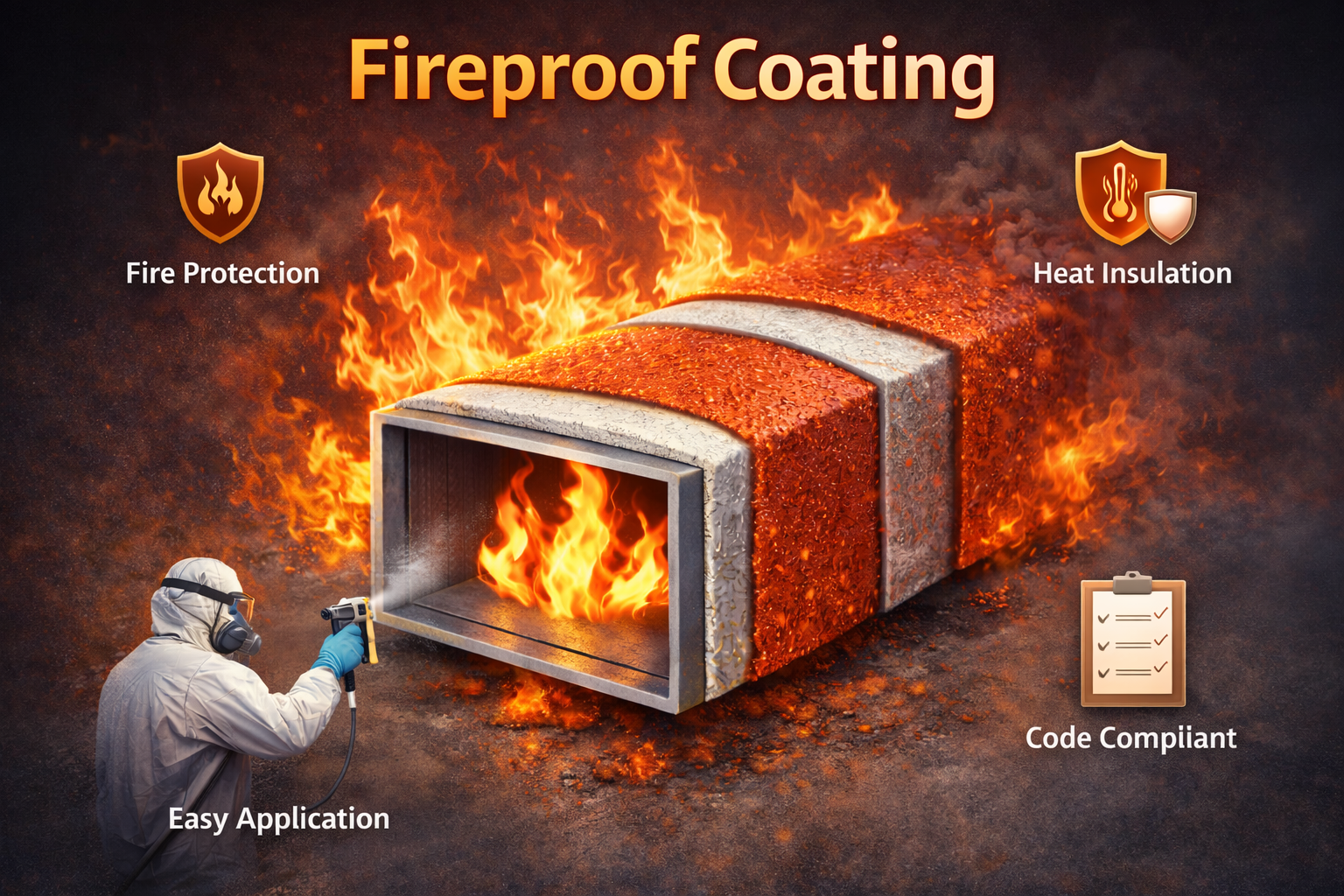
Fire proof coating for ducts refers to specialized fire-resistant materials applied to HVAC ducts to prevent the spread of fire and smoke during a fire incident. These coatings are designed to withstand high temperatures and maintain the structural integrity of the duct for a specified fire rating period, such as 30, 60, 90, or 120 minutes.
Unlike traditional insulation, fire proof coatings expand or form a protective barrier when exposed to heat, reducing heat transfer and preventing duct collapse.
Why Fire Proof Coating for Duct Is Important
HVAC ducts often pass through multiple fire zones within a building. If not properly protected, they can become conduits for fire and smoke. Applying fire proof coating helps in:
- Limiting fire spread through duct systems
- Maintaining compartmentation in fire-rated areas
- Reducing smoke movement, which is a leading cause of fire-related injuries
- Ensuring compliance with fire safety regulations
For high-risk environments such as hospitals, data centers, malls, and high-rise buildings, fire-resistant duct protection is essential.
Types of Fire Proof Coatings for Ducts
Several types of fire proof coatings are used depending on application requirements and fire ratings.
Intumescent Coatings
Intumescent coatings expand when exposed to heat, forming a thick insulating char that protects the duct surface.
Cementitious Coatings
These coatings are mineral-based and provide excellent thermal insulation. They are often used in industrial and commercial buildings where durability is critical.
Epoxy-Based Fire Retardant Coatings
Epoxy coatings offer fire resistance along with corrosion protection, making them suitable for ducts exposed to harsh environments.
Key Benefits of Fire Proof Coating for Ducts
Improved Fire Resistance
Fire proof coatings significantly increase the fire resistance rating of duct systems, preventing premature failure during a fire.
Compliance with Fire Safety Standards
These coatings help meet national and international fire codes, including building regulations and safety norms.
Enhanced Structural Integrity
By protecting duct surfaces from extreme heat, fire proof coatings maintain structural stability during emergencies.
Reduced Smoke Transmission
Fire-resistant duct coatings help minimize smoke leakage, supporting effective smoke management systems.
Applications of Fire Proof Coating for Ducts
Fire proof duct coatings are widely used across various sectors:
- Commercial buildings and offices
- Hospitals and healthcare facilities
- Airports and metro stations
- Industrial plants and factories
- Residential high-rise buildings
Each application may require different fire ratings and coating thicknesses depending on risk levels.
Installation Process of Fire Proof Coating
Proper installation is crucial for effective performance. The general process includes:
- Surface preparation – Cleaning and priming the duct surface
- Application of coating – Spraying or brushing the fire proof material
- Thickness control – Ensuring the required dry film thickness
- Curing and inspection – Allowing proper drying and conducting quality checks
Professional installation ensures durability and compliance with fire testing standards.
Standards and Certifications
Fire proof coatings for ducts are tested and certified according to recognized fire safety standards. These certifications validate performance during fire exposure and help ensure regulatory approval.
Using certified products is essential for building approvals and safety audits.
Maintenance and Durability
While fire proof coatings are long-lasting, periodic inspections are recommended to ensure continued effectiveness. Environmental factors, mechanical damage, or renovations may require touch-ups or reapplication.
Regular maintenance helps preserve fire resistance and system reliability.
Conclusion
Fire proof coating for duct systems is a critical component of modern fire safety strategies. By preventing the spread of fire and smoke through HVAC networks, these coatings protect lives, reduce property damage, and support regulatory compliance. Whether in commercial complexes, industrial facilities, or residential buildings, investing in fire-resistant duct coatings enhances overall safety and resilience.
As fire safety standards continue to evolve, fire proof coatings for ducts remain an essential solution for achieving robust, passive fire protection in today’s buildings.